
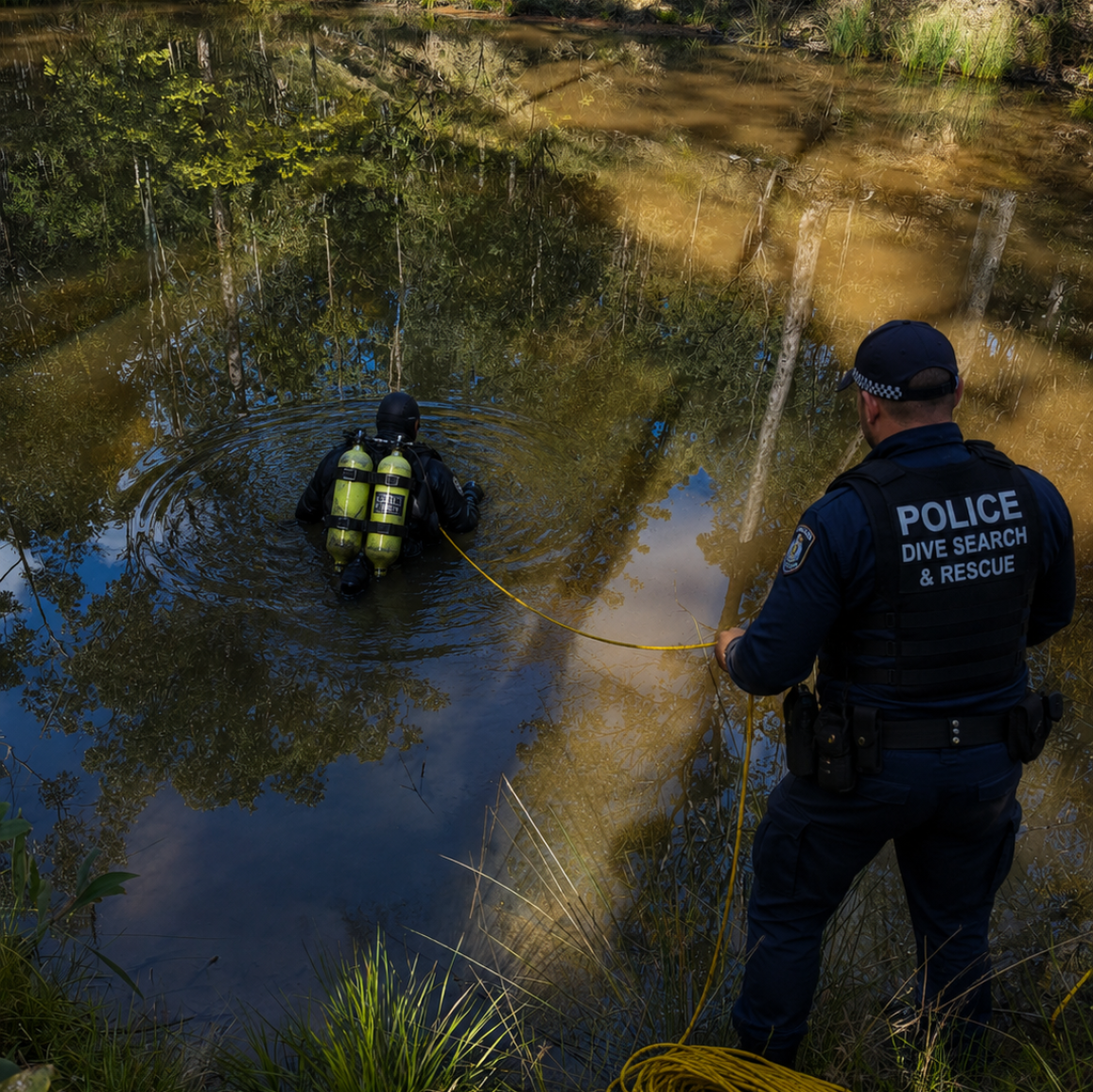
Outdoor Training 1 – Police Water Vehicle and Body Search is a specialist law enforcement course designed to prepare police officers for the safe and systematic location of submerged vehicles, missing persons, and deceased persons in aquatic environments. The training focuses on police search methodology, scene preservation, evidence management, and operational planning for searches conducted in rivers, lakes, dams, estuaries, and coastal waters. Officers develop an understanding of how environmental factors such as water depth, visibility, currents, tides, and underwater hazards influence search strategies while ensuring the safety of all personnel involved.
A strong emphasis is placed on officer safety, leadership, communication, and interagency coordination during complex water search operations. Participants develop the skills to effectively plan, manage, and support police-led search and recovery missions while working alongside specialist police dive squads, forensic investigators, marine units, and emergency service partners. Upon completion, officers are equipped with the operational knowledge, technical capability, and decision-making skills required to conduct professional water vehicle and body search operations in accordance with policing standards and best practice
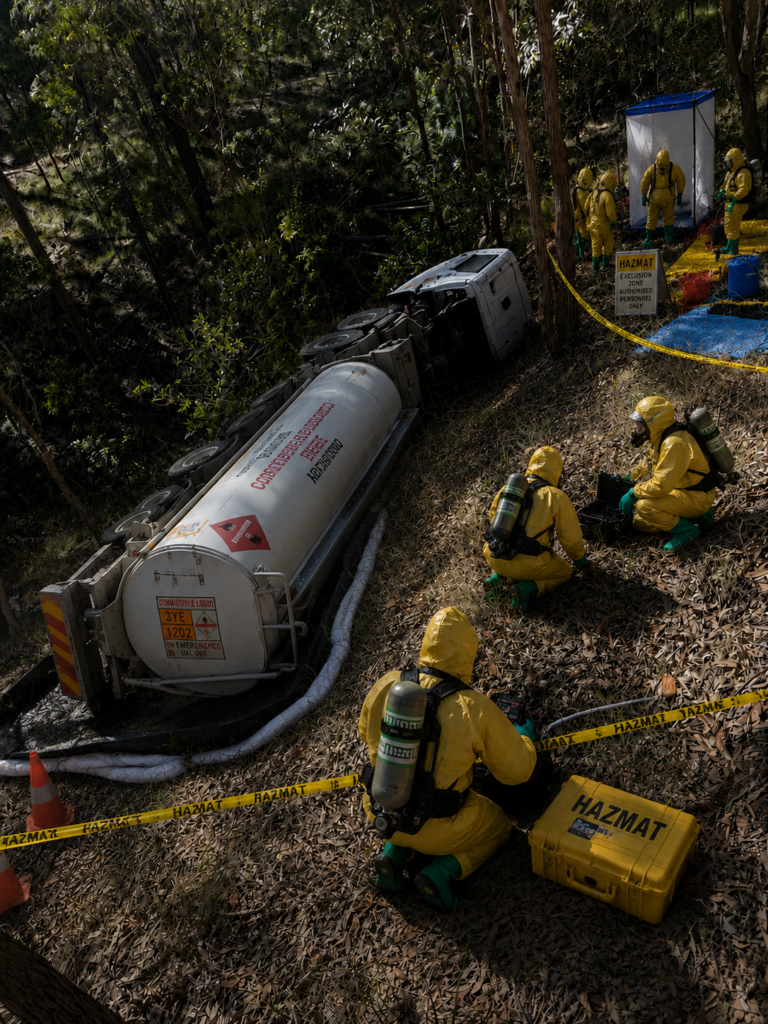
Outdoor Training 2 – Training in hazardous chemicals and hazardous chemical vehicle rollovers provides emergency responders with the knowledge and practical skills to safely manage incidents involving the release or potential release of dangerous goods. Participants learn to identify hazardous substances using vehicle placards, Safety Data Sheets (SDS), the Australian Dangerous Goods (ADG) Code, and emergency response guides. The training focuses on scene assessment, hazard identification, risk management, establishing exclusion zones, the correct use of personal protective equipment (PPE), and implementing safe operating procedures to protect responders, the public, and surrounding communities during chemical emergencies.
A significant component of the training is dedicated to protecting the environment following a hazardous chemical spill caused by a vehicle rollover or transport incident. Participants learn containment and control techniques to prevent chemicals from entering waterways, stormwater systems, and sensitive ecosystems through the use of spill booms, absorbent materials, drain covers, and containment bunds. The course also covers decontamination procedures, environmental monitoring, waste disposal requirements, and coordination with environmental protection agencies and hazardous materials (HAZMAT) teams. By applying these practices, responders can minimise environmental damage, preserve public health, and ensure incidents are managed safely, efficiently, and in accordance with legislative and environmental protection requirements.
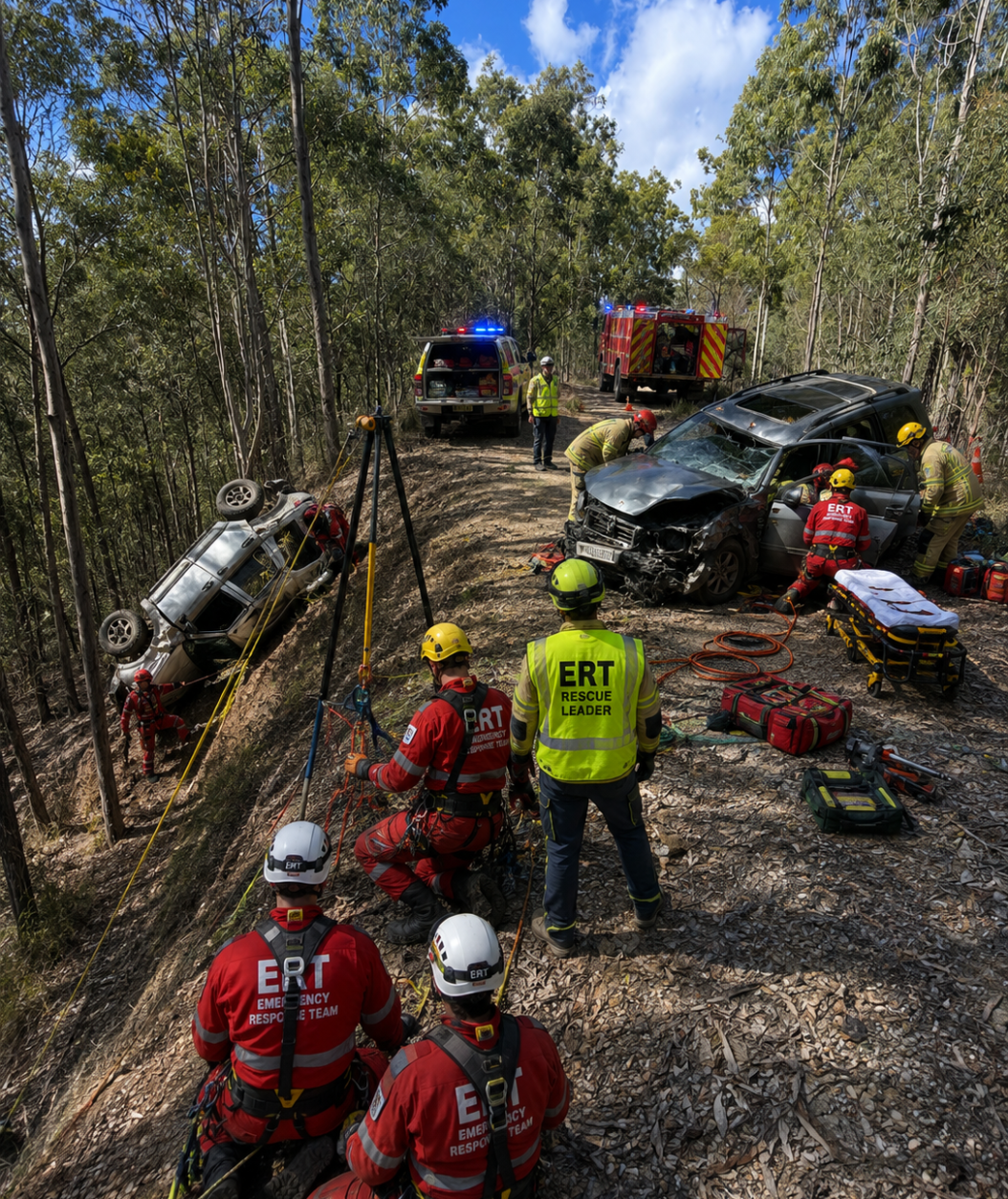
Outdoor Training 3 – Road Crash Rescue equips emergency responders with the knowledge and practical skills required to safely manage a wide range of motor vehicle collision incidents. Training begins with the management of two-vehicle crashes and progresses to more complex rescue scenarios, including vehicles on their side, resting on the roof, and those that have left the roadway and come to rest over embankments. Participants learn how to conduct dynamic risk assessments, establish scene safety, stabilise damaged vehicles, manage traffic hazards, and protect casualties while working in challenging and unpredictable environments. The course also develops proficiency in the use of hydraulic rescue equipment, hand tools, lifting and stabilisation systems, and safe extrication techniques.
Practical scenarios are designed to replicate real-world road crash incidents, requiring participants to apply systematic rescue procedures while working effectively within a multi-agency response involving fire and rescue services, ambulance personnel, police, and recovery operators. Emphasis is placed on casualty care during extrication, communication, leadership, and maintaining responder safety throughout the operation. By the end of the course, participants are capable of safely managing complex vehicle rescue incidents, including overturned vehicles and those positioned on unstable terrain, while delivering timely, coordinated, and professional rescue outcomes.
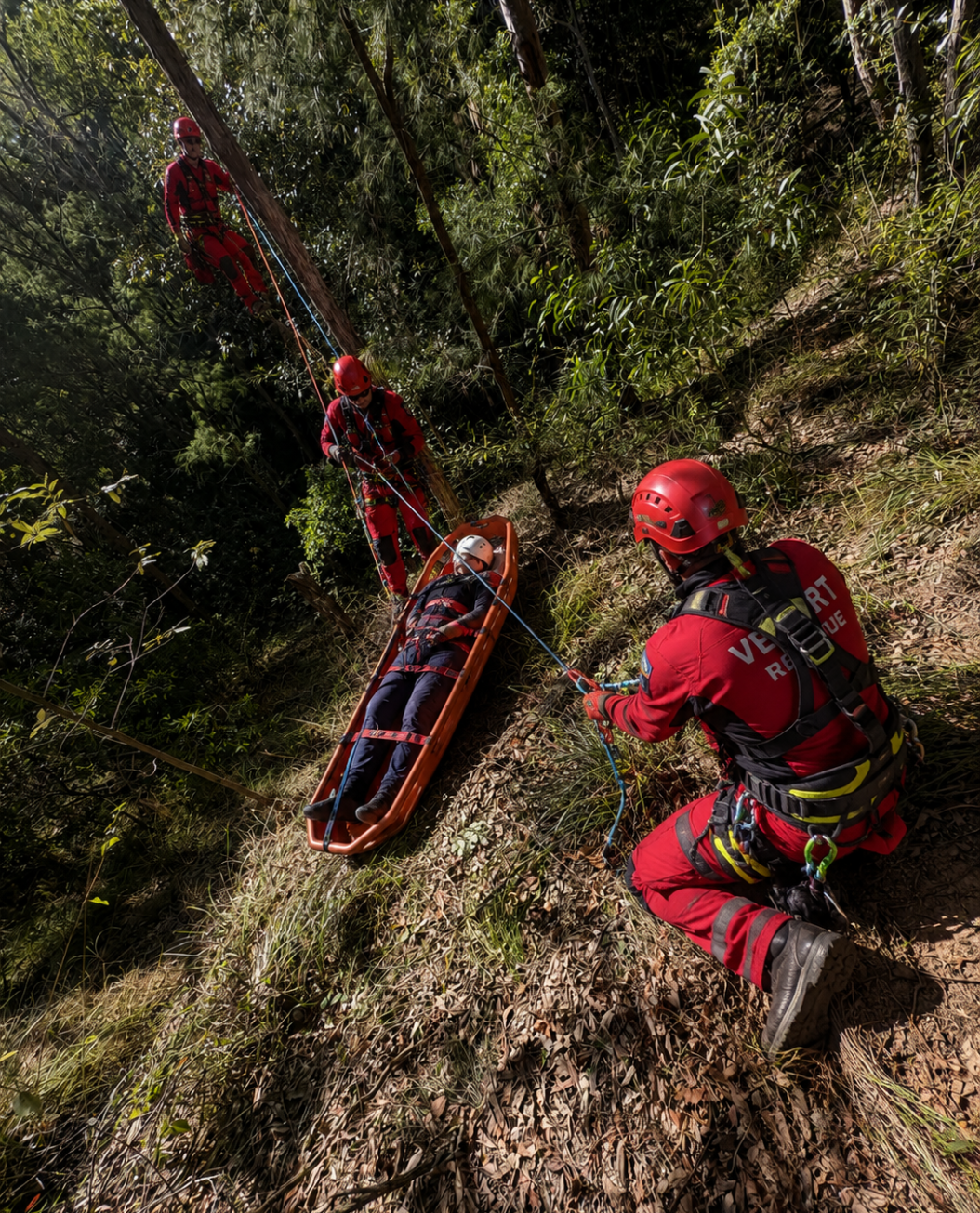
Outdoor Training 4 – Vertical Rescue provides emergency responders with the specialised knowledge and practical skills required to safely conduct rescues in steep, elevated, and difficult-to-access environments. The course covers rescue operations across a multitude of slopes and embankments, including cliffs, rock faces, quarries, bridges, and other challenging terrain where conventional rescue techniques are not suitable. Participants learn rope rescue principles, anchor systems, edge protection, casualty packaging, stretcher handling, and the safe use of specialised rescue equipment. Emphasis is placed on hazard identification, risk assessment, rope systems, and maintaining the safety of both rescuers and casualties throughout every phase of the operation.
Practical training is centred on realistic rescue scenarios that replicate complex vertical rescue incidents, requiring participants to apply technical rope rescue techniques in dynamic environments. Scenarios include casualty recovery from steep embankments, cliff faces, confined access locations, and remote areas where multiple rescue disciplines must be integrated. Participants develop proficiency in ascending and descending rope systems, lowering and raising casualties, high-angle stretcher operations, and coordinating rescues within a structured incident management framework. By the end of the course, responders are equipped with the technical competence, confidence, and teamwork skills required to safely manage complex vertical rescue operations while delivering efficient, professional, and safe rescue outcomes.
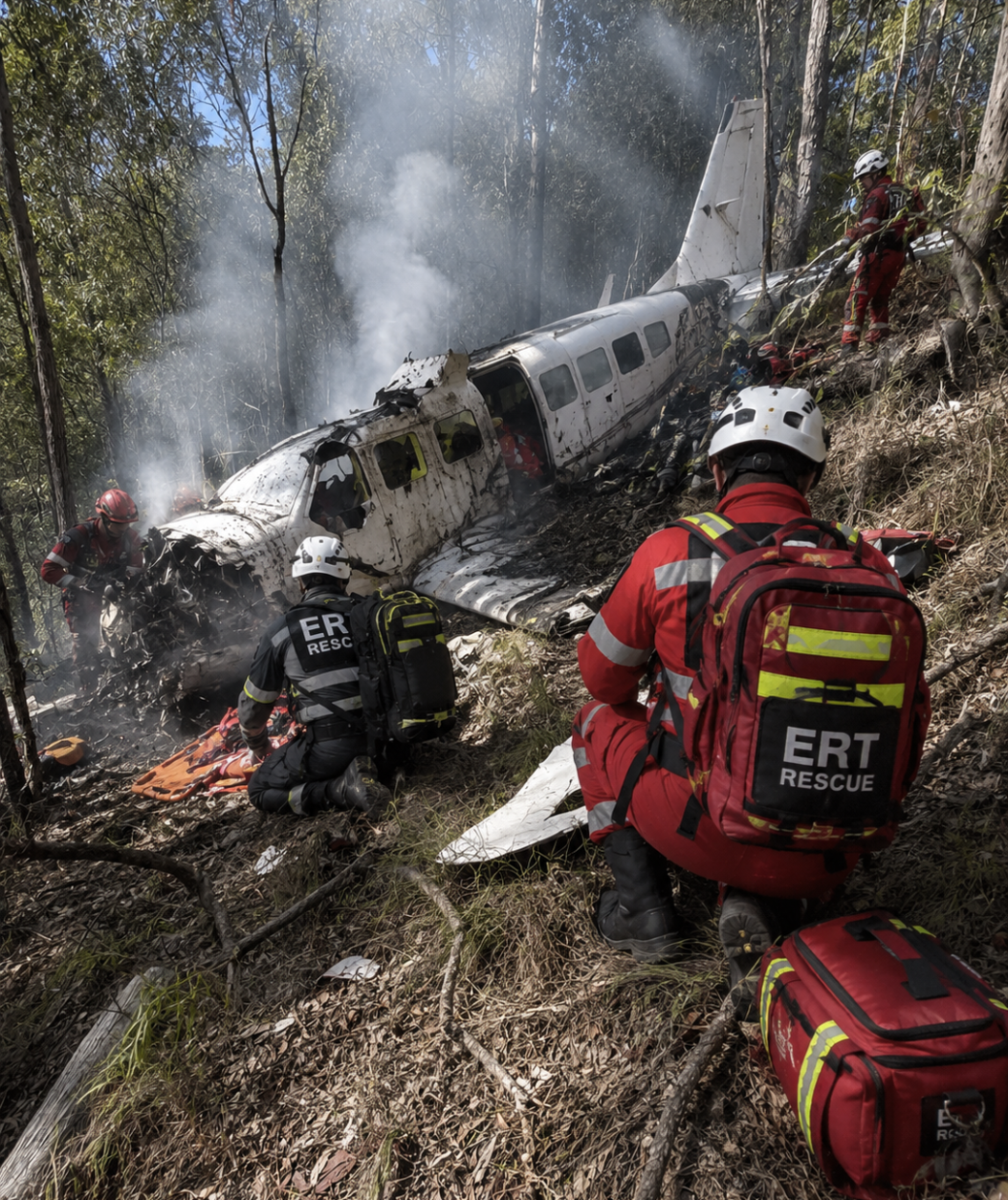
Outdoor Training 5 – Aircraft Crash Rescue prepares emergency responders to safely manage the complex challenges associated with an aircraft accident in remote and hazardous terrain. The training is based on a simulated response to a 12-seat aircraft that has crashed on a steep mountainside, requiring participants to conduct search and rescue operations in difficult access environments. Responders learn incident assessment, scene safety, hazard identification, aircraft-specific risks, and search strategies while navigating steep slopes, unstable ground, and adverse weather conditions. Particular emphasis is placed on establishing safe access routes, maintaining responder accountability, and coordinating operations within an incident management framework.
Practical scenarios require participants to locate the crash site, conduct systematic searches for survivors, and safely gain access to the aircraft in low-visibility conditions caused by darkness, smoke, debris, or confined cabin spaces. Training focuses on casualty assessment, stabilisation, and the safe extrication of injured occupants using appropriate rescue techniques and equipment while managing hazards such as aviation fuel, damaged aircraft structures, fire risks, and difficult terrain. Throughout the course, participants develop the skills to work effectively as part of a coordinated multi-agency response, ensuring rescuer safety, efficient casualty recovery, and professional management of complex aircraft rescue incidents in remote environments.
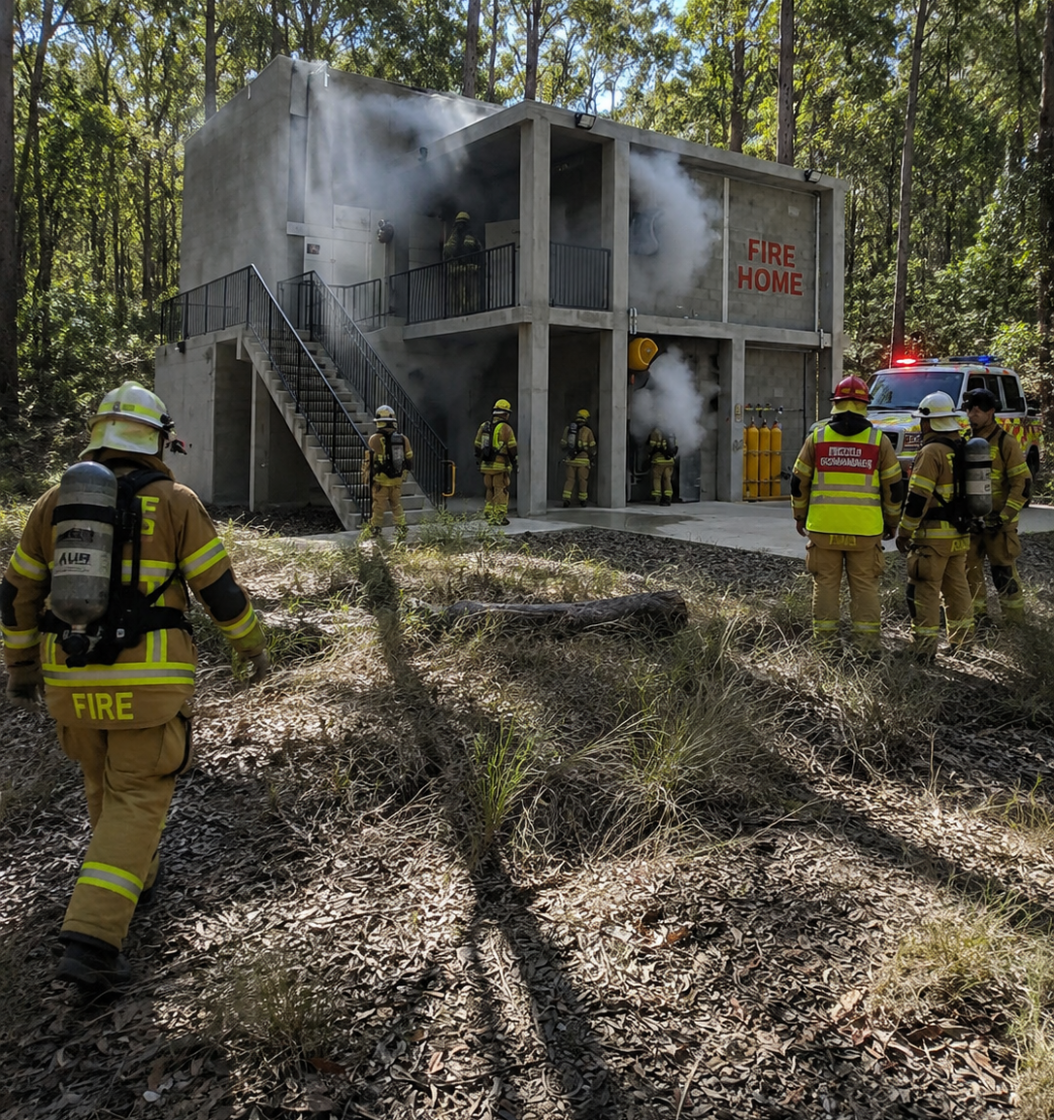
Outdoor Training 6 – Structural Fire and Search & Rescue equips students with the knowledge and practical skills required to safely manage a range of complex structural fire emergencies. Training focuses on fire behaviour, fire dynamics, scene size-up, risk assessment, incident command, and the safe use of firefighting equipment and personal protective equipment (PPE). Students learn firefighting tactics for residential and commercial structures, including hose line management, fire suppression techniques, ventilation, exposure protection, and maintaining crew safety while operating in hazardous, smoke-filled environments.
Practical scenarios simulate realistic structural fire incidents where students are required to conduct systematic primary and secondary searches, locate and rescue trapped occupants, and safely extricate casualties from low-visibility and high-risk environments. Training emphasises teamwork, communication, situational awareness, and accountability while operating under breathing apparatus (BA). Students also develop skills in casualty removal, firefighter emergency procedures, and coordinated rescue operations, ensuring they can effectively manage complex structural fire incidents while prioritising the safety of both casualties and emergency response personnel.